 English
 العربية
 中文語言
中文語言
 हिंदी भाषा
 हespañol
 русский
 Português
 Le français
 Deutsch
 ภาษาไทย
 Português

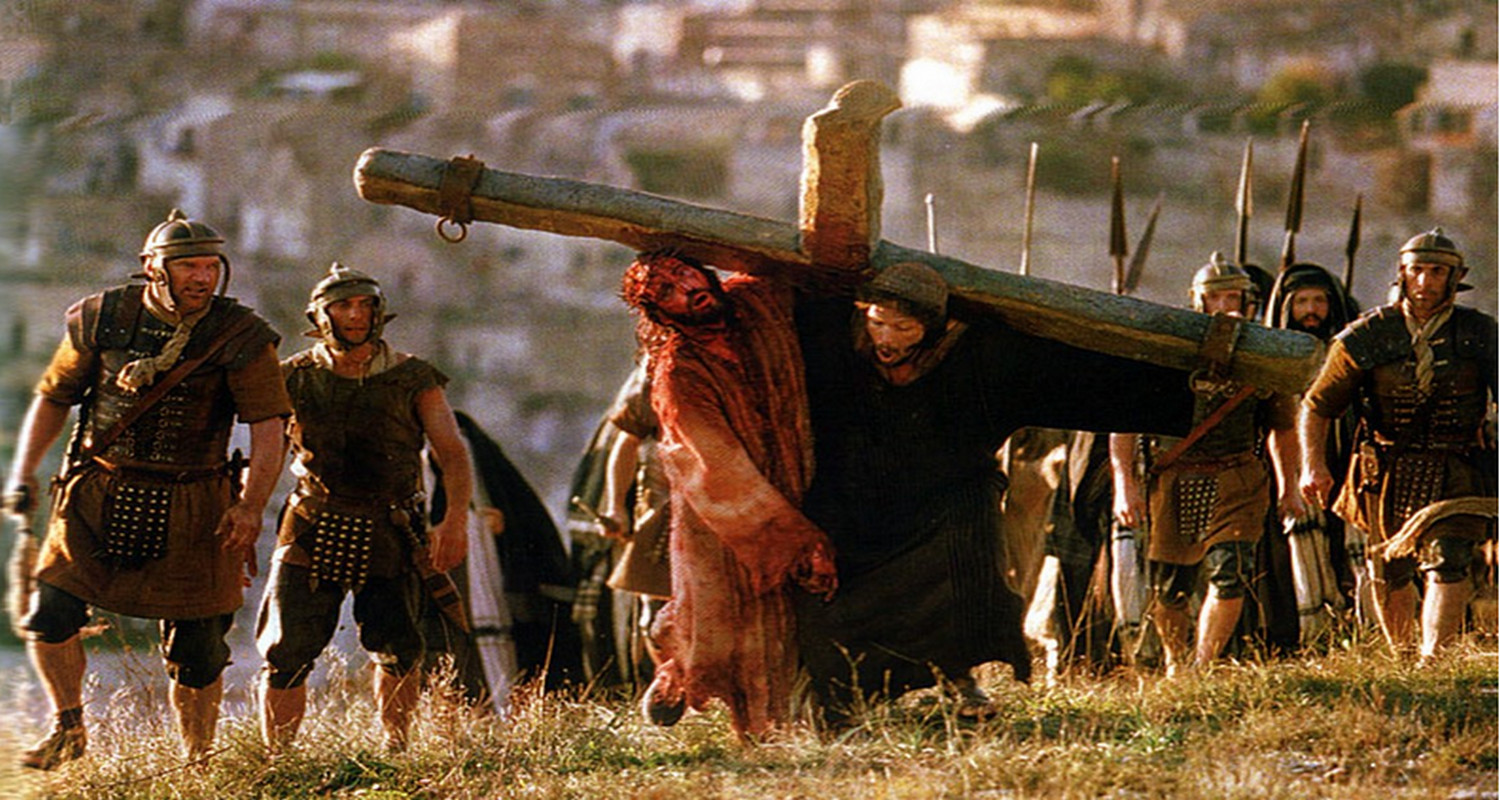
Towards the Cross
After that, Pilate sent Jesus to be crucified. He walked slowly, silently, patiently, and tolerantly.
The governor ordered that his cause, i.e., the nature of his crime, be written on a placard: "This is Jesus of Nazareth, King of the Jews." They wrote it in Hebrew, Greek, and Latin. Hebrew was the language of religion, Greek was the language of literature and thought, and Latin was the official language of the state.
This placard was carried at the front of the procession, announcing to each person in their own language the crime of which the person was convicted. The chief priests were displeased with the text of this inscription and objected to it, but Pilate decided that what he had written had been written.
They loaded him onto the cross on which they were going to crucify him, urging him on. He walked, enduring the pain of the flogging, carrying a heavy cross until he became extremely exhausted.
When he could no longer bear to carry the heavy piece of wood, they seized a man named Simon of Cyrene, who was coming from the field, and carried the cross to the place of crucifixion.
Perhaps the Cyrenean was a farmer or a visitor who wanted to witness the feast, and his fate was to share in carrying Christ's cross. What a blessing it was to be at the right time and in the right place!
"And as they led him away, they seized Simon, a Cyrenean who was coming from the field, and laid the cross on him, so that he might carry it behind Jesus." (Luke 23:26)
By Brother / Makram Mashreqi

Add New Comment